

TAKASE Ryuichi Assistant Professor
My DreamTackling next-generation fermentation, life's origins, and agri-food through the power of enzymes and microbes.
ThemeCentered on enzymes and microorganisms, we drive next-generation fermentation using AI-designed enzymes and explore the origins of life through enzyme reverse-evolution. Furthermore, by focusing on novel enzymes from uncultured microorganisms, we elucidate the unknown nature of the livestock gut microbiome, aiming to contribute to global food security.
Field
Keyword
Instructable research topic for doctoral thesis
- 次世代微生物発酵の研究 〜AIを活用した酵素の合理的設計〜
- 生命起源とエネルギー獲得機構の解明 〜酵素の「逆進化」から見る温故知新〜
- 畜産動物の腸内環境の理解 〜未利用バイオマスを分解する新規酵素の「宝探し」〜
Message
目に見えない小さな生命体である微生物、そしてその生命活動を支えるさらに小さな酵素。それらの未知なる領域を徹底的に追求することで、大きな応用の可能性が立ち現れてくると信じて研究を行っています。
最先端の「ドライ」と伝統的な「ウェット」を駆使する、次世代のバイオサイエンスを学んでみませんか。
未知を解き明かす面白さに目覚めたなら、ぜひ大学院まで進み、その壮大なテーマに一緒に挑みましょう。
| Academic degree | Ph.D. in Agricultural Science |
| Self introduction |
I am originally from Hyogo Prefecture. My research has primarily focused on elucidating biological phenomena and their applications from the perspectives of microbiology and enzyme chemistry. My journey into research began because I was completely captivated by the infinite capabilities of enzymes, and I am committed to continuing the pursuit of their unexplored potential. On my days off, inspired by mountaineering manga, I aim to take on the challenge of full-scale climbing in the magnificent mountains of Hokkaido. |
| Room address | General Research Building III |
| Room number | 3-407 |
| Mail address | takase.r  obihiro.ac.jp
 |
Belongs
Research Department/Department of Life and Food Sciences/Division of Food Science/Section of Biomolecular Structure and FunctionIntroduction
We maximize the potential of "enzymes"—the microscopic biocatalysts that fundamentally support life—to conduct a wide range of research, from unraveling the mysteries of life to applications in the agriculture and livestock industries. Our approach is broadly divided into the following three pillars:
1. "Enzyme Creation" via AI and Protein Engineering
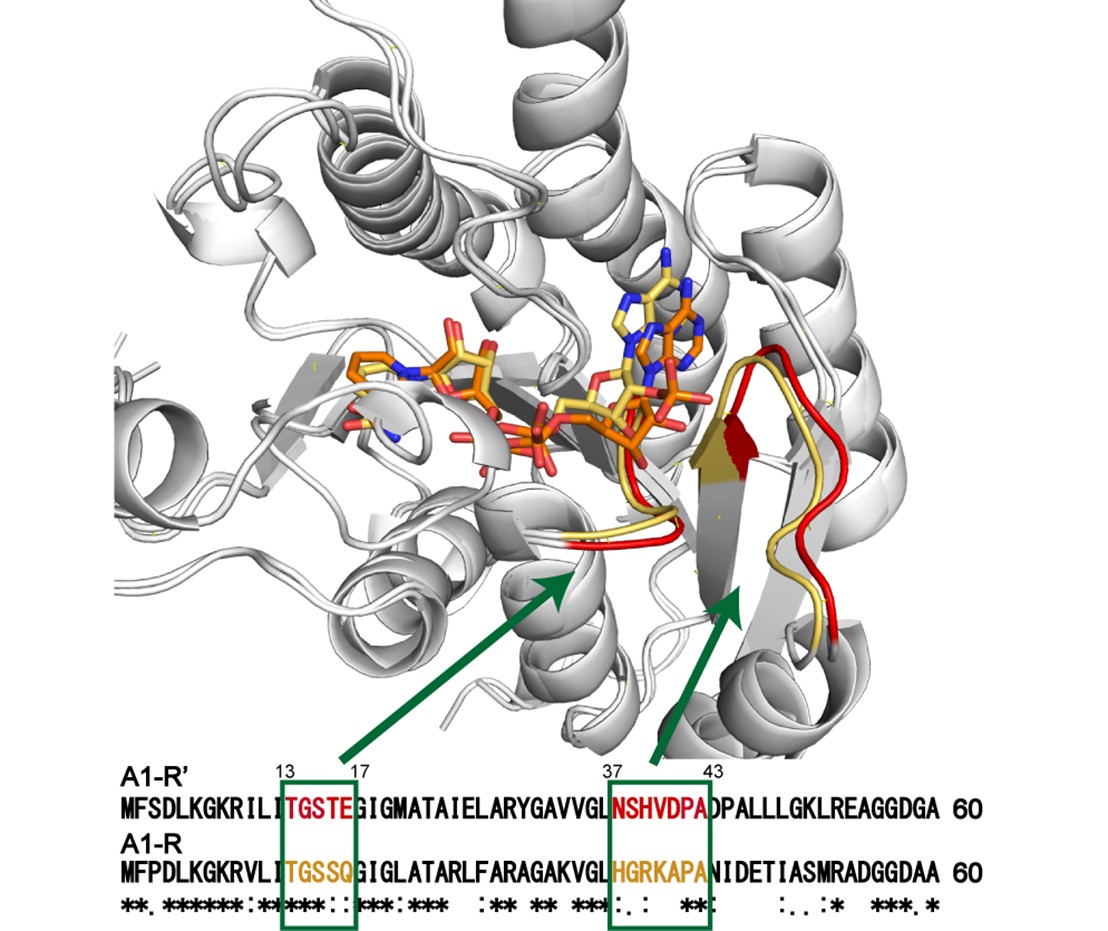
Artificial enzymes designed by AI will dramatically expand the possibilities of microbial biomanufacturing. In the future, high-value substances currently produced through complex organic synthesis could be manufactured via microbial cultivation using AI-enzymes. In such next-generation biomanufacturing, controlling the intracellular "redox balance" of microbes is a major key to improving yields. By rationally designing the coenzyme requirements involved in enzyme redox using AI, we will break through this challenge and construct highly efficient, next-generation fermentation production systems.
2. "Unraveling the Mysteries of Life and Learning from the Past" via Enzyme Reverse Evolution
Using computational science, we artificially "reverse-evolve" crucial core enzymes governing energy metabolism back to their ancestral states. We explore the evolutionary origins of how primitive life acquired its current efficient energy utilization mechanisms in the environment billions of years ago. By unlocking the mysteries of life from the trajectory of past evolution, we aim to connect these insights to the design of next-generation artificial enzymes.
3. "Understanding the Livestock Gut Environment" via Novel Enzyme Discovery
The livestock gut microbiome is an outstanding group of specialists that degrade and utilize robust, unused biomass, building astonishing metabolic networks individually or cooperatively. Recently, it has become clear that "uncultured microorganisms" play an extremely important role in these networks both qualitatively and quantitatively. Viewing these uncultured microbes as unexplored genetic resources, we conduct a "treasure hunt" for novel enzymes involved in unused biomass metabolism. We fully mobilize dry methods like metagenomic analysis and AI-based functional prediction, alongside wet methods like biochemical screening and assays. Starting from the functions of the discovered enzymes, we will unravel the unknown nature of the complex cooperative mechanisms woven by the livestock gut microbiome, aiming to contribute to global food security.
By organically linking these three approaches—creation, reverse evolution, and discovery of enzymes—we will deploy a cohesive bioscience bridging basic research and practical applications.
List of current research topics
- Next-generation microbial fermentation based on the rational design of coenzyme specificity
- Elucidation of the origin of life and energy acquisition mechanisms through enzyme reverse-evolution
- Discovery and application of unused biomass-related enzymes from uncultured microorganisms in the livestock gut
| Related industries | Biomanufacturing (White Biotechnology), Food / Food Tech, Agri-Food / Food Security, Environmental Biotechnology / Unused Resource Utilization, Next-generation Fermentation / Smart Cell Industry |
| Affiliated academic society | Japan Society for Bioscience, Biotechnology, and Agrochemistry |
| Academic background | 2009: B.S., Faculty of Agriculture, Kyoto University 2015: Ph.D., Graduate School of Agriculture, Kyoto University 2015-2018: Postdoctoral Fellow, Thomas Jefferson University, USA 2019-2022: Assistant Professor, Graduate School of Agriculture, Kyoto University 2022-2026: Engaged in family business (research equipment and software development) 2026-Present: Assistant Professor, Obihiro University of Agriculture and Veterinary Medicine |