日本語情報
基本情報
氏名
木村 賢人氏名よみがな(教員一覧並び順決定時のみ利用)
きむらまさと職階
准教授学位
博士(農学)資格
学歴・職歴
2002年 香川大学農学部 卒業2004年 北海道大学大学院農学研究科環境資源学専攻 修士課程修了
2010年 北海道大学大学院農学研究科環境資源学専攻 博士課程修了
2010年 帯広畜産大学地域環境学研究部門 助教
2017年 現職
自己紹介
茨城県出身ですが、小学校は秋田県、中学・高校は茨城県、大学は香川県と移り住み、大学院から北海道に住んでいます。北海道に来てからは、北海道の各地域の寒さ分布特性や、寒さを利用した貯蔵庫に関する研究を行っています。
写真1
写真2
備考
連絡先
電話番号
0155-49-5450FAX番号
メールアドレス
masa-k@obihiro.ac.jp居室
居室のある建物
総合研究棟Ⅰ号館部屋番号
N1302-7部屋番号をウェブサイトに掲載希望
いいえ学部(ユニット)
所属ユニット
農業環境工学ユニット大学院(専攻・コース)
所属専攻・コース(その1)
畜産科学専攻/農業環境工学コース所属専攻・コース(その2)
畜産科学専攻博士後期課程所属・担当
所属
研究域/環境農学研究部門/農業環境工学分野/農業環境工学系リンク
研究室(名称)
研究室(ウェブサイトURL)
Researchmap
https://researchmap.jp/read0154446研究業績・特許(J-GLOBAL)
その他のリンク(その1)
研究シーズ : https://www.obihiro.ac.jp/facility/crcenter/seeds/420その他のリンク(その2)
帯広畜産大学で自分のやりたい研究を見つけよう! : https://www.obihiro.ac.jp/find-research/category/technology研究紹介
My Dream
北海道の寒さの有効活用研究テーマ
冬期の寒さのみによって製造された氷から得られる冷熱エネルギーの効率的な利用方法の開発研究分野
農業気象学キーワード
アイスシェルター, 雪氷冷熱, 冷熱資源, 気象資源研究紹介
雪氷・凍土は触れると冷たいという特徴を有していることから、物や空間を冷やす冷熱源として利用できます。さらに、氷(水)由来の冷熱であることから、低温・高湿度環境を創り出すことができます。この環境は農作物の長期貯蔵に最適であることから、農業が主要産業の一つである北海道において、雪氷冷熱を有効利用できれば、収穫された農作物の省エネ貯蔵が可能となります。
これまで雪氷冷熱を有効かつ効率的に利用するため、様々な方法が考案されてきました。その中で、アイスシェルターと呼ばれる氷の冷熱を利用したシステムについて研究を行っています。
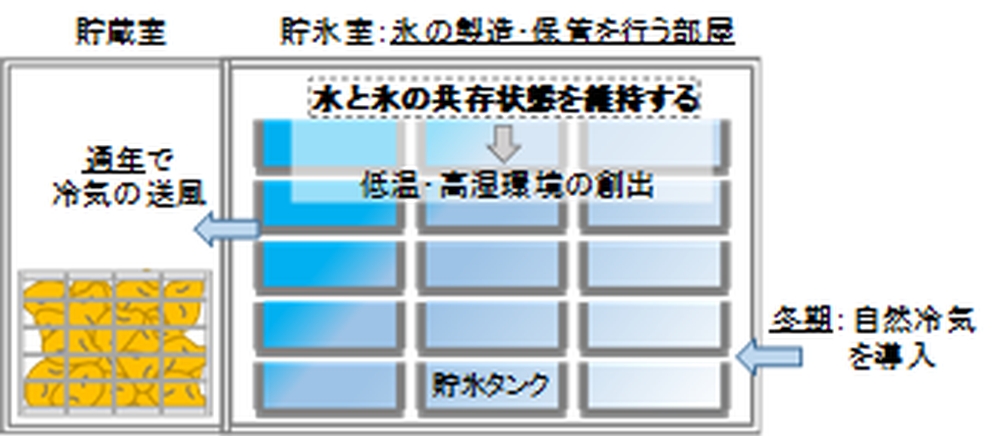
アイスシェルターでは冷熱源である氷を貯氷室と呼ばれる部屋で製造・保管します。氷の製造は自然冷気のみで行うため、冬期に通気口が開放されます。一方、夏期は通気口を閉め、断熱施工された壁・屋根などから流入する熱によって氷は徐々に解けます。つまり、貯氷室内では水の凍結・融解が繰り返し行われます。そのため、夏期は氷を解かして室内の空気から熱を奪い、逆に冬期は水を凍らせることで室内の空気に熱を与える、というサイクルが繰り返されることになります。この一連の水の相変化によって貯氷室内は低温・高湿な環境となり、この空気を隣接する部屋、例えば貯蔵室に送風することで、農産物の長期貯蔵に最適な環境を電気をほとんど使用することなく創り出すことができます。
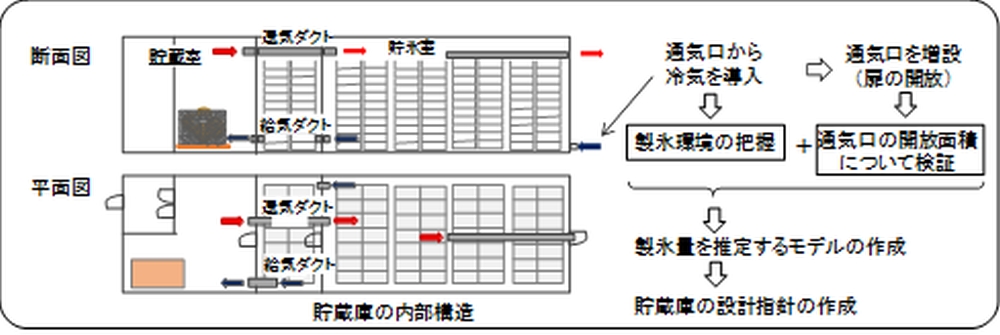
しかし、いくつかの課題はあります。その一つとして、自然冷気で計画量の氷を製造することです。一般的に、アイスシェルターで必要な氷量は100トン以上です。自然冷気によってこのような大量の氷を製造することは一見容易に行うことができそうですが、貯氷室内では水と氷の共存状態を維持しなければならず、この条件下で製氷を行うことは容易なことではありません。この問題を解決するため、製氷期間中の貯氷室内の環境を把握するための様々な観測を行い、基礎データを収集しています。今後は、そのデータをもとに製氷量を推定する製氷モデルを開発、さらに設計指針の作成を目指しています。
また、北海道で雪氷冷熱を有効に利用するためには、雪氷冷熱の賦存量を把握する必要があります。そのため、地域の冷熱量に関連する気象環境や地理的・地形的要因を考慮した雪氷冷熱の賦存量の評価方法についても検討しています。
研究紹介画像(その1)
研究紹介画像(その2)
【改良後】現在取り組んでいる研究テーマ一覧
- 100トン以上の氷から得られる冷熱を利用した省エネ型農産物貯蔵庫の設計指針の作成に関する研究
- 冷熱エネルギーの賦存量の評価方法に関する研究
- 十勝地方の降水の分布特性に関する研究
【改良前】現在取り組んでいる研究テーマ一覧
- 100トン以上の氷から得られる冷熱を利用した省エネ型農産物貯蔵庫の設計指針の作成に関する研究
- 冷熱エネルギーの賦存量の評価方法に関する研究
- 十勝地方の降水の分布特性に関する研究
関連産業分野
所属学会
日本農業気象学会, 日本雪氷学会, 農業農村工学会, 日本緑化工学会Editor
Editorial Board
プロジェクト
学部生向け
卒業研究として指導可能なテーマ
- 氷冷熱型農産物貯蔵庫における2年間の融解量と使用冷熱量の検証
- 氷冷熱型農産物貯蔵庫において通気口開放面積と外気温が製氷環境に与える影響
- GISを用いた北海道における雪氷冷熱量の評価
- 北海道の過去30年間における夏期の降水特性
- 北海道における冬期の気温の長期的変動傾向
メッセージ
北海道らしい研究をしたいと考えているのであれば、私と一緒に研究をしてみませんか。
雪氷冷熱に関する研究は、積雪寒冷地でなければできません。特に、氷の冷熱利用に関する研究は、日本では寒冷な気象環境の北海道でしかできません。また、雪氷冷熱以外にも、冬期の北海道の気温や十勝地域の雨に関する研究なども行っています。講義や実験などで私の研究や農業気象学に興味を持ったら、ぜひ私の部屋まで来てください。
スペシャルコンテンツ「ぎゅ牛〜っとちくだい」
スペシャルコンテンツ「畜大人インタビュー」
英語情報
基本情報
氏名
KIMURA Masato職階
Associate Professor学位
Ph.D.資格
学歴・職歴
B. Agr., 2002: Faculity of Agriculture, Kagawa University, Kagawa, JapanM. Agr., 2004: Graduate School of Agriculture, Hokkaido University, Hokkaido, Japan
Ph. D., 2010: Graduate School of Agriculture, Hokkaido University, Hokkaido, Japan
2010: Assistant Professor, Agro-Enviromental Science, Obihiro University of Agriculture and Veterinary Medicine
2017: Associate Professor, Agro-Enviromental Science, Obihiro University of Agriculture and Veterinary Medicine
自己紹介
Although I'm from Ibaraki, I've lived in Hokkaido since entering graduate school, after moving to Akita for elementary school, then Ibaraki for junior high and high school, and then Kagawa for university. Since coming to Hokkaido, I've researched how cold is distributed here and how to use cold energy for storage.
備考
居室
居室のある建物
General Research Building 1部屋番号
N1302-7部屋番号をウェブサイトに掲載希望
No学部(ユニット)
所属ユニット
Agricultural Engineering Program大学院(専攻・コース)
所属専攻・コース(その1)
Doctoral and Master's Program of Animal Science and Agriculture/Engineering for Agriculture所属専攻・コース(その2)
畜産科学専攻博士後期課程所属・担当
所属
Research Department/Department of Agro-environmental Science/Division of Environmental and Agricultural Engineering/Section of Environmental and Agricultural Engineeringリンク
研究室(名称)
研究室(ウェブサイトURL)
Researchmap
https://researchmap.jp/read0154446?lang=en研究業績・特許(J-GLOBAL)
研究紹介
My Dream
Efficient use of winter cold in Hokkaido研究テーマ
Development of methods for efficeinet use of cold enegy from natural ice produced by winter cold air研究分野
Agricultural meteorologyキーワード
Ice Shelter, cold energy from ice and snow, cold energy resources, meteorological resources研究紹介
Snow, ice and frozen soil are all characterized by coldness to the touch. These materials can be used as sources of cold to keep things and spaces cold. Furthermore, since their cold comes from ice (water), it's possible to create low-temperature, high-humidity environments. Such environments are optimal for the long-term storage of agricultural crops, so if we can effectively use the cold of snow and ice in Hokkaido, where agriculture is a major industry, then the energy-saving storage of harvested crops will become possible.
Various methods have been devised to efficiently and effectively use the cold of snow and ice. I conduct research on a system called an “ice shelter,” which uses the cold of ice.
An ice shelter produces and stores ice, a source of cold energy, in an ice storage room. Since the system produces ice by using only the natural coldness of air, the vents are open in winter. In summer, the vents are closed and the ice gradually melts as heat flows in through the insulated walls and roof. In other words, water is repeatedly frozen and thawed in the ice storage room. When the ice melts in summer, it takes heat from the indoor air; when the water freezes in winter, it returns that heat to the air. The cycle is repeated, and this series of changes results in a low-temperature, high-humidity environment in the ice storage room. By blowing the air to an adjacent storage room, it's possible to create an ideal environment for storing agricultural products on a long-term basis without using much electricity.
However, there are some challenges. One is to produce the planned amount of ice from the natural cold. Generally, an ice shelter requires at least 100 tons of ice. Although it may seem easy to produce such large amounts of ice by using natural cold air, it's necessary for water and ice to coexist in the ice storage room, a condition under which it is difficult to make ice. To solve this problem, a variety of research is conducted to determine the environment inside the ice storage room during the ice-making period as basic data. Based on that data, we'll develop an ice-making model to estimate how much ice can be made. We aim to create design guidelines.
In addition, to effectively use the cold of snow and ice in Hokkaido, it's necessary to determine how much of such cold is available. We also examine methods for evaluating the amount of cold energy available from snow and ice. This requires that we consider the climatic environment and geographical and topographical factors related to cold in this area.
研究紹介画像(その1)
研究紹介画像(その2)
現在取り組んでいる研究テーマ一覧
- Study on design guides for energy-saving farm storage using cold enegy form natural ice of 100 ton or more.
- Study on evaluation methods for the amount of available cold energy from snow and ice.
- Study on distribution characteristics of rainfall in Tokachi area, Hokkaido.
関連産業分野
所属学会
The Society of Agricultural Meteorology of Japan, The Japanese Society of Snow and Ice, The Japanese Society of Irrigation, Drainage and Rural Engineering, The Japanese Society of Revegetation TechnologyEditor
Editorial Board